



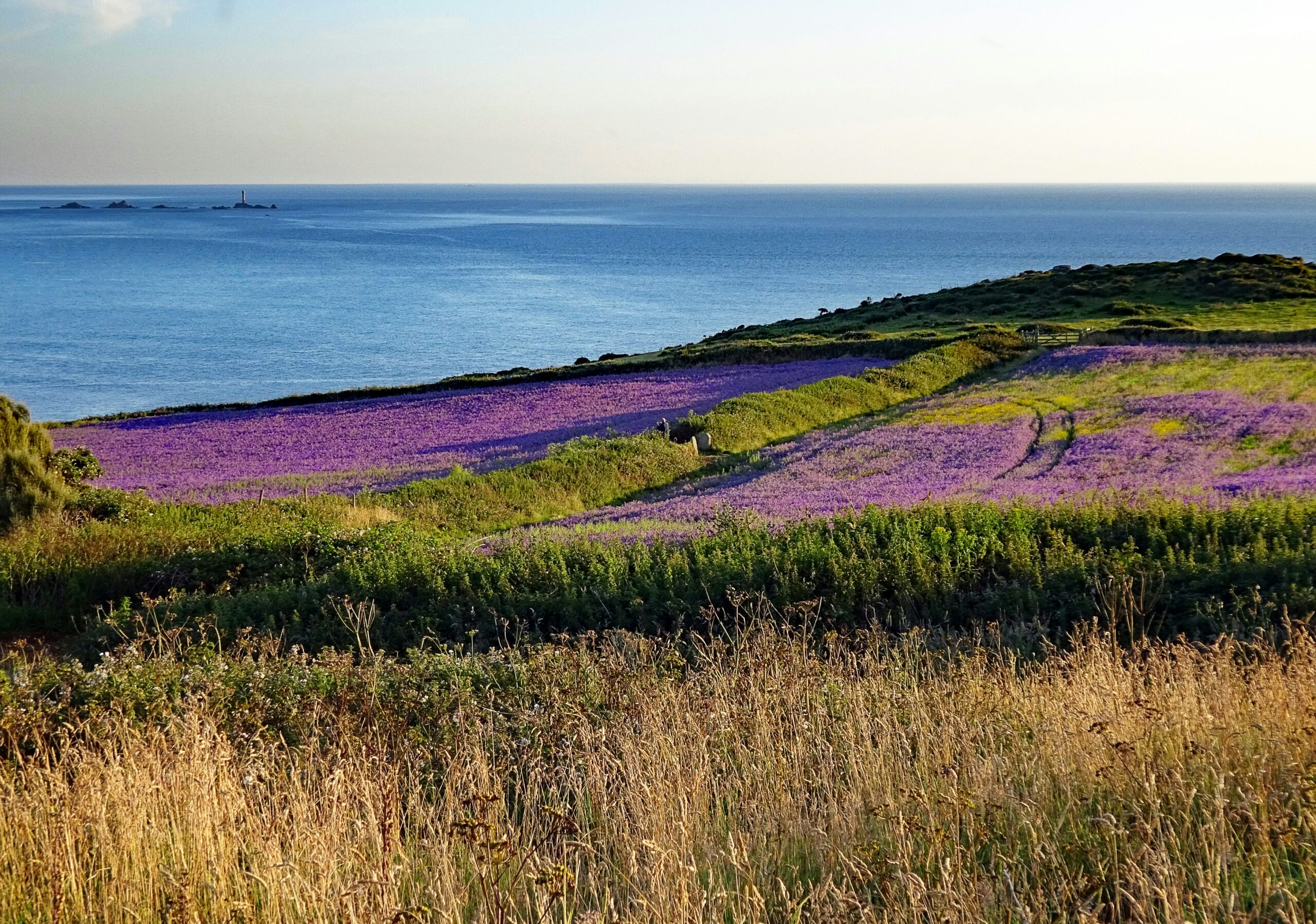
In the rugged, coastal landscape of southwest England, a voice that was once declared silent is beginning to grow loud again. While many endangered languages struggle against the tide of modernization, Cornish (or Kernewek) stands as a rare beacon of hope: a language that technically “died” and was then brought back to life by the sheer will of its people.
The Celtic Roots of Kernewek
Cornish is a Brittonic Celtic language, making it a close relative of Welsh and Breton (spoken in Brittany, France). For centuries, it was the primary tongue of the people in Cornwall. It thrived in the tin mines, on fishing boats, and in the small villages that dot the dramatic cliffs of the Atlantic coast.
Unlike the Germanic roots of English, Cornish is melodic and deeply tied to the geography of its home. Many of the place names in Cornwall today—like Penzance (Holy Headland) or Polperro (Piran’s Pool)—are linguistic fossils that remained even when the language was no longer spoken daily.
MORE LANGUAGES
Read our pieces on other endangered languages:
The Seri Language
The Yuchi Language
The Keres Language
The Njerep Language
The Long Silence: Decline and “Extinction”
The decline of Cornish was a gradual process spanning several hundred years. As English influence moved westward, Cornish was pushed further toward the “Land’s End.”
By the 18th century, the number of fluent speakers had dwindled to a handful. History often cites Dolly Pentreath, who died in 1777, as the last native speaker of the language. While some scholars debate this, her death became a symbol for the end of an era. For over a century, Cornish was considered a “dead” language, preserved only in old manuscripts and scholarly texts.
The Great Revival
The story of Cornish didn’t end in the 18th century. In the early 1900s, a movement began to reconstruct and speak the language once again. What started as a niche academic interest blossomed into a full-scale cultural revolution.
Today, there are roughly 500 to 600 fluent speakers, and thousands more who have a basic conversational knowledge. In 2010, UNESCO officially changed the status of Cornish from “extinct” to “critically endangered”—a massive victory for the community. Today, you can find Cornish-language films, music, and even a handful of “language nest” schools where children are being raised as bilingual speakers.
Why Cornish is Unique
Several factors make the Cornish story a fascinating case study for linguists:
-
Successful Reconstruction: It is one of the few languages to be successfully revived after a period of total dormancy.
-
Cultural Identity: The revival has sparked a renewed sense of Cornish identity, distinct from the broader English culture.
-
Modern Adaptation: New words have been created for modern concepts (like computers and cars) by looking at how their “sister” languages, Welsh and Breton, handle modern terminology.
HIGH-QUALITY TRANSCRIPTION
Want instant access to transcript ordering, price lists, and more? Sign up for your free client portal now.
The Future of the Language
The fate of Cornish is a testament to the fact that extinction is not always final. While it still faces challenges (including a lack of official government funding compared to other regional languages), the enthusiasm of the younger generation is palpable.
The story of Kernewek is a call to action for other endangered language communities. It proves that with enough passion, documentation, and community support, a “whisper” can once again become a conversation.
Sign Up for Our Newsletter
The latest and greatest in transcription and translation news.

Leave a Reply